

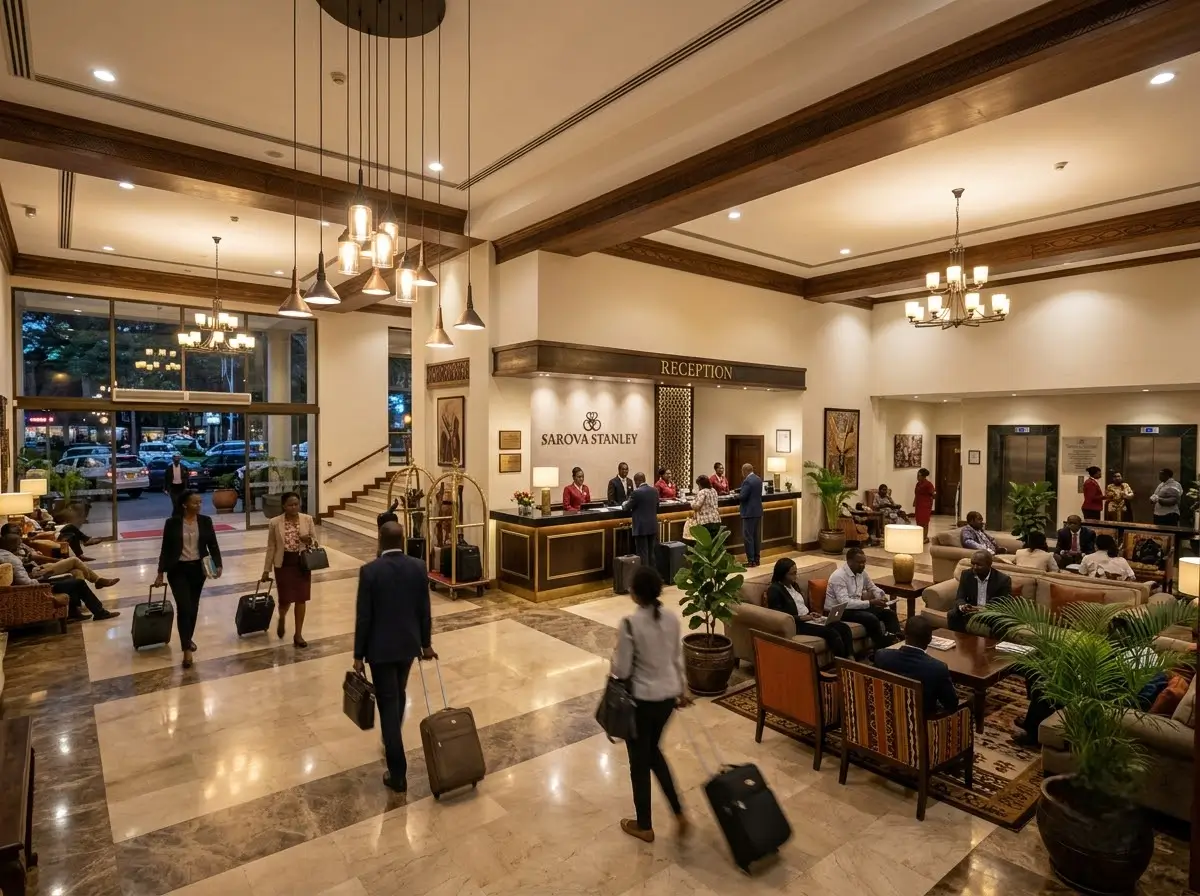
Search for interior designers Nairobi Kenya businesses recommend and most results talk about residential work, feature walls, statement lighting, a client’s personal taste. None of that transfers cleanly to a hotel lobby that needs to handle hundreds of guests a week, meet fire and safety codes, and still look like somewhere worth a second visit.
Hospitality interiors are a different discipline from a home. Here’s what actually changes, and what’s worth asking an interior designer before a hotel or hospitality project starts.
Why Hospitality Design Isn’t Just Bigger Residential Design
A guest room gets used by a different person every few nights, cleaned on a tight turnaround, and needs to hold up to that cycle for years without looking tired. A restaurant or lobby needs to manage foot traffic patterns most residential designers never have to think about. Durability, guest flow, and brand consistency across dozens or hundreds of similar spaces all become design constraints that simply don’t exist in a private home.
What Changes for a Hotel or Hospitality Project
Durability over decoration
Fabrics, flooring, and finishes need to survive constant use and professional cleaning cycles, not just look good on day one. A designer without hospitality experience can specify beautiful materials that wear badly within a year.
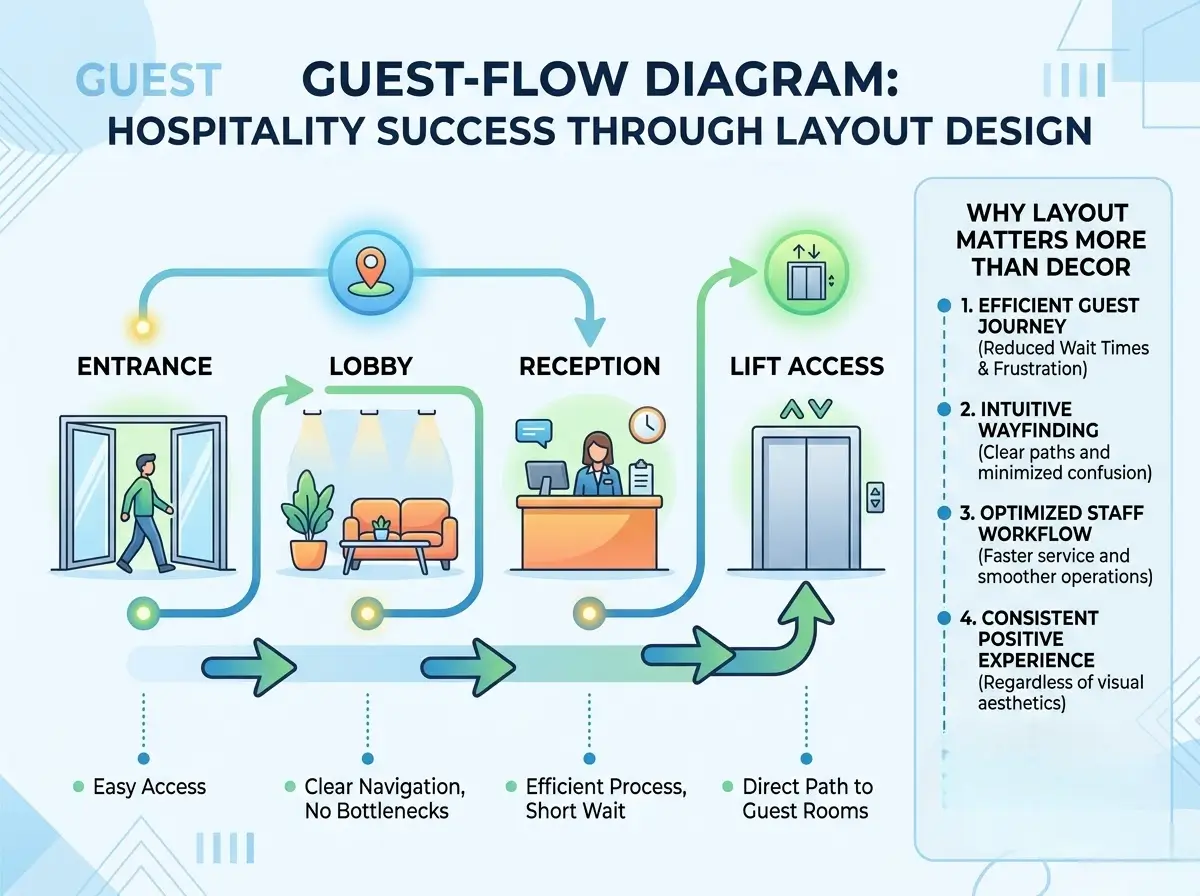
Guest flow, not just room layout
Where reception sits relative to the lobby, how guests move from entrance to lift to room, and how staff move without crossing guest paths, all shape the design before a single finish gets chosen.
Brand consistency at scale
A boutique hotel with twenty rooms or a chain property with two hundred both need every room to feel consistent, which requires a level of specification discipline that a one-off residential project doesn’t demand.
Compliance from day one
Fire safety, accessibility, and building code requirements are more involved for public and hospitality spaces than for a private residence, and need to be built into the design rather than retrofitted later.
Coordination with construction, not design in isolation
A hospitality interior rarely exists on its own. It’s usually part of a build or renovation involving contractors, engineers, and project managers, and a designer who can coordinate directly with that team avoids the handoff problems that show up when design and construction are managed separately.
Residential Interior Design vs Hospitality Interior Design
| Consideration | Residential project | Hotel or hospitality project |
|---|---|---|
| Primary driver | Personal taste and lifestyle | Guest experience and operational durability |
| Material choice | Aesthetic-led | Durability and cleaning-cycle led |
| Layout priority | Room-by-room comfort | Guest flow and staff efficiency |
| Consistency needs | Each room can differ | Consistent standard across many rooms |
| Compliance complexity | Lower | Higher, fire and accessibility codes central |
| Typical coordination | Designer and client | Designer, contractor, and engineers together |
Where R World Fits in Hospitality Interiors
R World Enterprise Ltd. designs interiors specifically for the hospitality sector alongside residential, financial, and corporate work, combining spatial planning, material selection, and finishing details tailored to how a space is actually used, not just how it photographs. Completed hospitality work includes the Fairview Hotel on Bishop Road, Western Heights, and Grand West Hotel & Apartments, projects that required durability, guest-flow planning, and construction coordination, not just a design brief.
Since interior work is handled alongside civil construction, design and build, and fit-out services under one company, hospitality clients avoid managing a separate design firm and construction contractor as two disconnected suppliers, which is often where hospitality projects lose time.
FAQ: Interior Design for Hotels and Hospitality Spaces in Nairobi
How is hotel interior design different from home interior design?
Hotel design has to account for constant guest turnover, heavy daily use, brand consistency across many rooms, and stricter compliance requirements, none of which apply in the same way to a private home.
Why does material choice matter more in a hospitality project?
Materials in a hotel face daily use and professional cleaning cycles that residential finishes rarely experience. A designer without hospitality experience may choose finishes that look right initially but wear out within a year or two.
Should the same company handle both interior design and construction for a hotel project?
It generally helps. Hospitality interiors are usually tied closely to construction or renovation work, and coordinating design and build under one team reduces the handoff issues that arise when they’re managed separately.
How important is guest flow in hotel interior design?
Very. Where reception, seating, and circulation routes sit relative to each other affects how guests experience a space just as much as the finishes do, and it needs to be planned before decoration decisions are made.
What compliance considerations apply to hospitality interiors that don’t apply to homes?
Fire safety and accessibility requirements are significantly more involved for hotels and public hospitality spaces, and need to be designed in from the start rather than added afterward.
Work With Interior Designers in Nairobi, Kenya Who Understand Hospitality
If you’re planning a hotel, restaurant, or hospitality renovation rather than a home, the considerations above are worth raising with any interior designer, R World included. Take a look at completed hospitality projects, read more about the interior design service, or explore fit-out services for a renovation project. If your project is a commercial office rather than a hospitality space, our broader guide to interior designers Nairobi Kenya for non-residential projects covers that ground too.
A beautiful lobby is the easy part. Designing one that still works after the thousandth guest walks through it is the actual job.
Planning a hotel or hospitality interior in Nairobi?
Let’s talk about guest flow, durability and brand consistency from day one.
Contact Us