

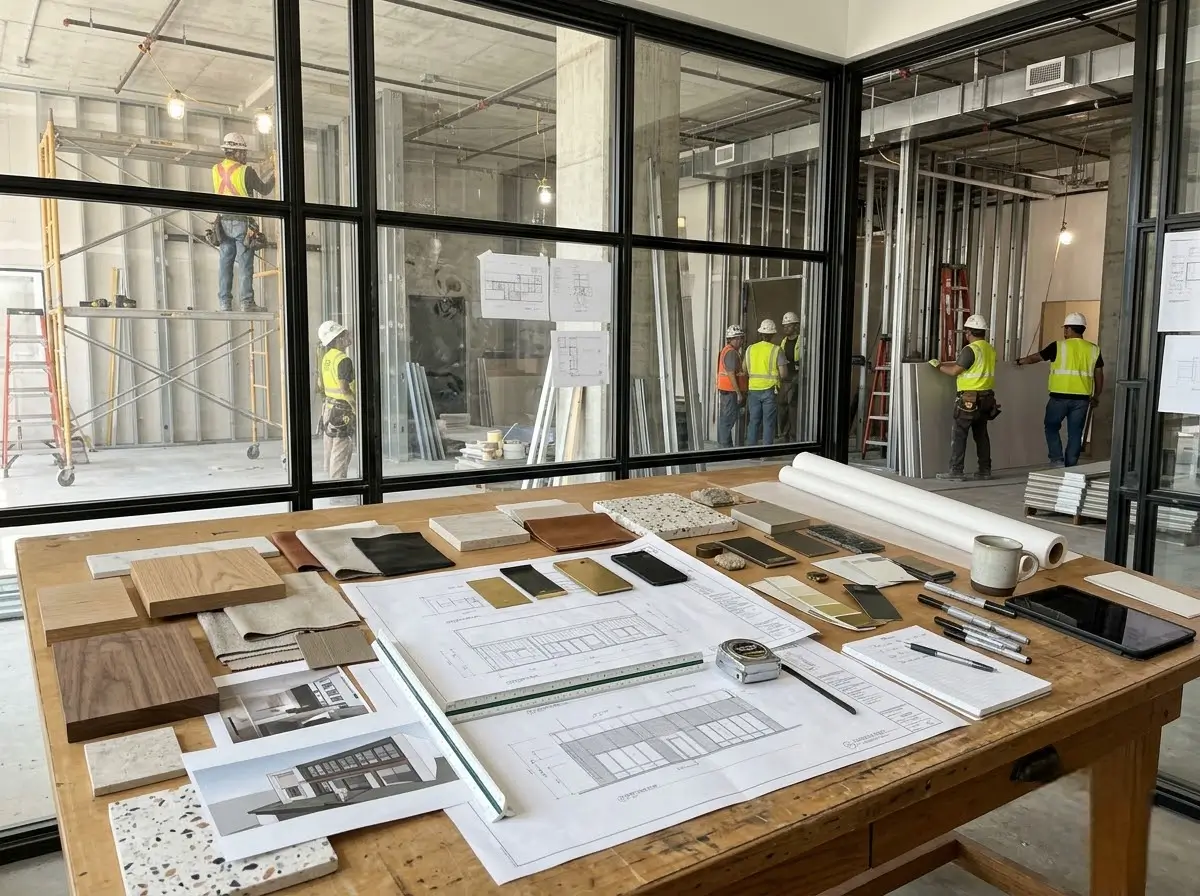
Somewhere between picking a style and signing a contract, most clients hit a decision that doesn’t get nearly enough attention: should the same company handle both the design and the actual construction, or should those be two separate hires? It sounds like a logistics detail, but it genuinely changes how smoothly your project runs — and it’s worth deciding deliberately rather than defaulting to whatever a single conversation happens to lead you toward. Better to settle it before you start comparing the best interior designers in Kenya.
The Two Models, Side by Side
| Consideration | Design-Only | Design-and-Build |
|---|---|---|
| Who’s involved | A designer, plus a separately hired contractor | One firm managing both design and construction |
| Coordination | You, or the designer, coordinate between two parties | Handled internally by one team |
| Accountability if something goes wrong | Can be unclear — design issue or build issue? | Clearer — one firm responsible for the full outcome |
| Flexibility to choose any designer or builder | Higher — you can mix and match specialists | Lower — tied to one firm’s combined capability |
| Risk of miscommunication | Higher, especially if design and build aren’t used to working together | Lower — design decisions are made with construction already in mind |
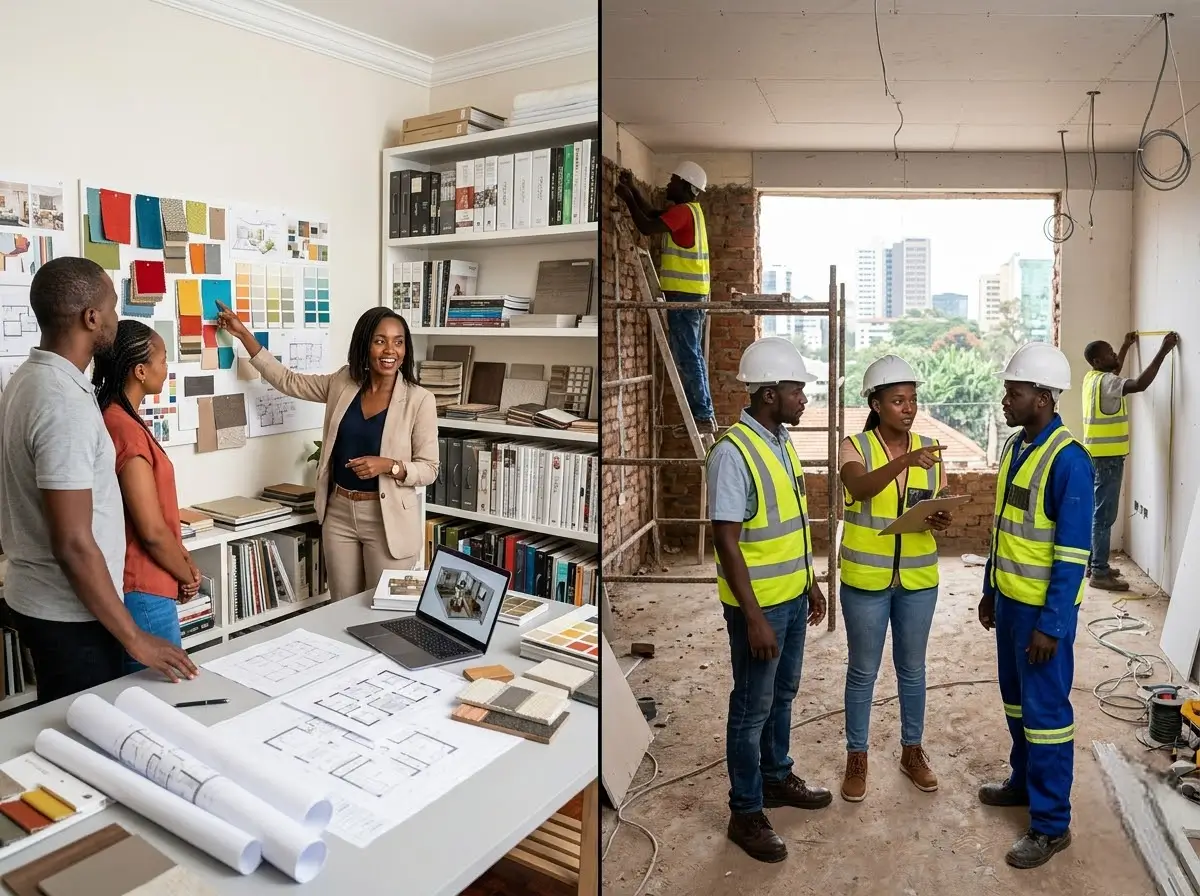
Why Design-Only Still Makes Sense for Some Projects
If your project doesn’t involve structural work — a styling refresh, new furniture and finishes in an existing, unchanged layout — a design-only engagement can be entirely sufficient. You’re not paying for construction management you don’t need, and you retain the flexibility to choose a contractor separately if any physical work does come up later. This model works best when the scope is genuinely contained and doesn’t require ongoing coordination between design decisions and construction realities.
Why Design-and-Build Solves a Real, Common Problem
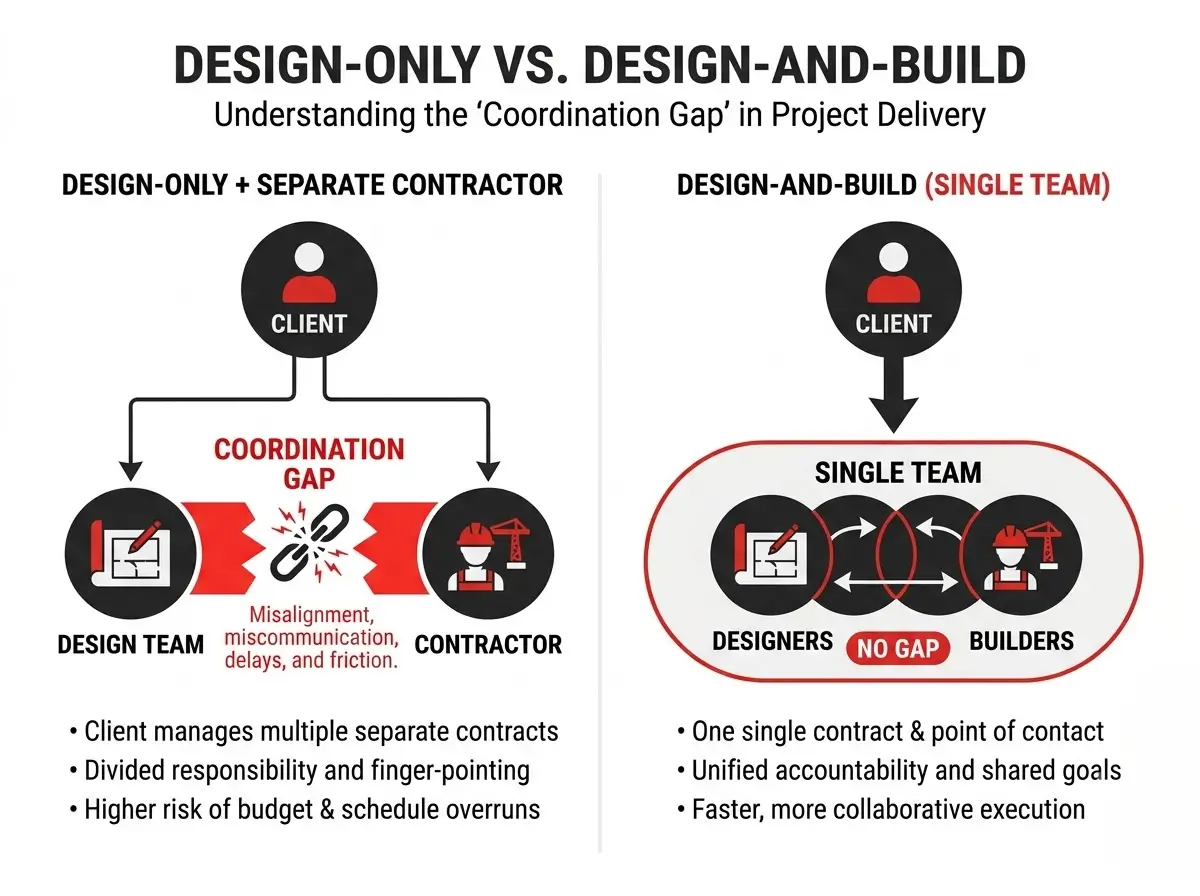
The moment a project involves actual construction — a layout change, a fit-out, new structural elements — coordinating a designer and a separate contractor becomes a genuine source of friction. Design and build, where one team like R World Enterprise Ltd. manages a project from architectural planning through to construction, removes that coordination gap entirely. Design decisions are made with construction already factored in, rather than a designer specifying something a contractor later has to work around or push back on.
Where the Coordination Gap Actually Shows Up
This isn’t a theoretical risk — it’s one of the most common sources of delay and frustration in projects involving both design and construction. A designer specifies a material or layout detail without full awareness of structural constraints; a contractor then has to flag the issue, and the client ends up in the middle, relaying information between two parties who aren’t used to working together. On a design-and-build project, this conversation happens internally, before it ever reaches the client as a problem to solve.
Accountability Is Genuinely Different Between the Two Models
If something goes wrong on a design-only project with a separately hired contractor, assigning responsibility can get murky — was it a design specification issue, or a construction execution issue? With design-and-build, one firm is accountable for the full outcome, which removes the finger-pointing risk entirely. For a client, that clarity alone is worth factoring into the decision, separate from any cost or timeline considerations.
Questions to Help You Decide
- Does my project involve any structural work, or is it purely cosmetic and styling-focused?
- Am I comfortable coordinating between a separate designer and contractor myself, or would I rather one team handle both?
- How important is having a single point of accountability if something doesn’t go as planned?
- Is the firm I’m considering genuinely capable of both design and construction, or just claiming to be?
FAQ: Design-Only vs. Design-and-Build
When does design-only make the most sense?
When a project doesn’t involve structural changes — a styling refresh or new finishes within an existing layout — design-only avoids paying for construction management you don’t need.
What’s the main advantage of design-and-build over hiring separately?
It removes the coordination gap between design decisions and construction execution, since one team manages both and factors construction realities into design from the start.
Is accountability really different between the two models?
Yes — with separate hires, responsibility for an issue can be unclear between designer and contractor. With design-and-build, one firm is accountable for the full outcome.
Does choosing design-and-build limit my options?
It does mean relying on one firm’s combined capability rather than mixing specialists, which is a reasonable trade-off to weigh against the coordination benefits.
Does R World Enterprise Ltd. offer design-and-build as a combined service?
Yes — R World offers construction, design & build, and interior design services, managing projects from architectural planning through to construction under one team.
The Short Version
Choosing between design-only and design-and-build when hiring among the best interior designers in Kenya comes down to whether your project involves real construction work — if it does, design-and-build’s single point of accountability and internal coordination genuinely reduces the friction that separate hires can create. If it doesn’t, design-only keeps things simpler and more flexible.
Discuss which model fits your project with R World Enterprise Ltd. or browse the project portfolio.
Not sure whether you need design-only or design-and-build?
Tell us about your project and we’ll help you work out which fits.
Contact Us