

Plenty of Interior Designers Nairobi Kenya work exclusively in homes, and plenty work exclusively in commercial spaces — the skills overlap, but they’re not identical, and a firm that’s genuinely good at one doesn’t automatically translate that skill to the other without real cross-sector experience. If you’re trying to understand what actually changes between the two, here’s an honest breakdown.
The Core Differences at a Glance
| Consideration | Residential Design | Commercial Design |
|---|---|---|
| Who it serves | One household’s needs and preferences | Multiple users — staff, customers, or guests |
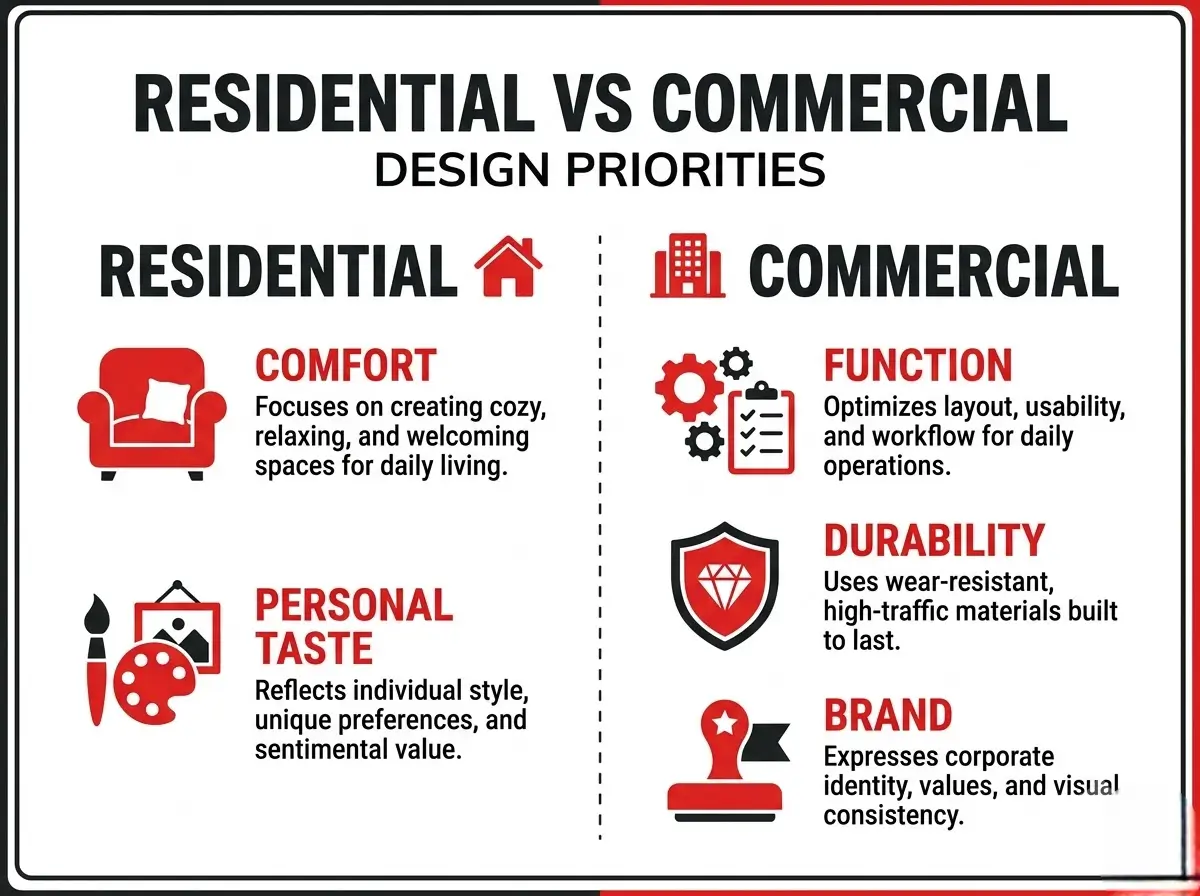
| Primary goal | Comfort, personal expression, daily living | Functionality, brand representation, durability |
| Decision-maker | Usually a single client or family | Often a business with multiple stakeholders |
| Material durability needs | Moderate — everyday residential wear | High — commercial spaces see heavier daily use |
| Timeline pressure | Generally more flexible | Often tied to a launch date, lease, or opening |
| Compliance considerations | Fewer, generally | More — depending on sector (retail, banking, hospitality) |
Why Personal Taste Drives Residential Design
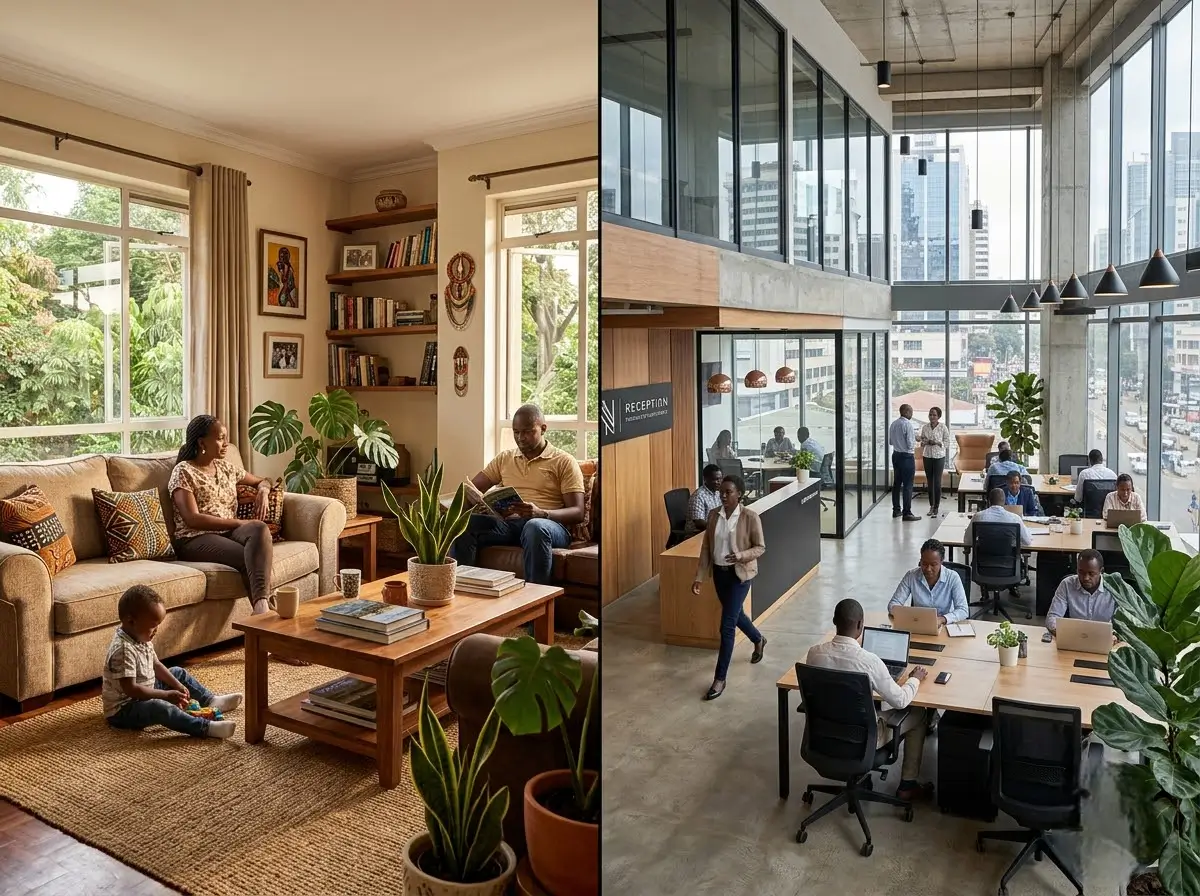
A home is designed around how one household actually lives — their routines, preferences, and the way they use each room day to day. The 7 layers of interior design (space planning through to accessories) apply here just as much as anywhere else, but the end result is shaped heavily by personal taste, since the people living in the space are also the ones who’ll judge whether it feels right.
Why Function Leads Commercial Design
Commercial spaces flip that priority. A retail unit, office, or hospitality venue needs to work for a wide range of users — customers, staff, guests — which means function, durability, and brand consistency tend to take priority over individual personal taste. R World Enterprise Ltd.’s commercial work, including retail (Carrefour Rongai) and corporate offices (Skyrise, Jaguar), reflects this functional-first approach, where the design serves a business purpose as much as an aesthetic one.
Material Choices Change Significantly
Durability requirements differ enormously between the two. A residential floor finish chosen for comfort and appearance in a home with light daily use is rarely suitable for a retail space seeing hundreds of footsteps a day, or a restaurant floor dealing with spills and heavy cleaning. Commercial material selection has to account for wear patterns that simply don’t apply at a residential scale, which is a genuinely different technical consideration for a designer to manage.
Compliance Adds a Layer Commercial Projects Can’t Skip
Commercial spaces, particularly in sectors like banking, hospitality, and retail, often carry compliance requirements — accessibility, fire safety, sector-specific regulation — that a residential project generally doesn’t need to navigate to the same degree. A designer working on commercial projects needs to build these considerations into the design from the start, not treat them as a separate problem to solve after the aesthetic decisions are made.
Why It’s Worth Checking a Firm’s Range Before Hiring
If your project sits on the commercial side — an office, retail unit, or hospitality venue — it’s worth specifically confirming a designer’s commercial experience rather than assuming residential skill transfers directly. R World Enterprise Ltd. works across both residential projects (including Treewall Apartments) and commercial sectors (banking, hospitality, retail, corporate), which is worth checking for in any firm you’re considering if your project could fall into either category.
FAQ: Residential vs. Commercial Interior Design
Can a residential interior designer handle a commercial project equally well?
Not necessarily — commercial design involves different priorities (function, durability, compliance) that a residential-focused designer may not have direct experience managing.
Why do material choices differ so much between the two?
Commercial spaces see significantly heavier daily use than residential ones, requiring materials chosen for durability and wear resistance rather than purely comfort and appearance.
Does commercial design involve more compliance requirements?
Yes — depending on the sector, commercial spaces often need to meet accessibility, fire safety, and sector-specific regulations that residential projects generally don’t face to the same extent.
Is personal taste less important in commercial design?
It plays a smaller role — commercial design tends to prioritise function and brand consistency for multiple users, rather than one household’s individual preferences.
Does R World Enterprise Ltd. work across both residential and commercial projects?
Yes — the company’s portfolio spans residential work (including Treewall Apartments) and commercial sectors including banking, hospitality, retail, and corporate.
The Short Version
Residential and commercial interior design in Nairobi share underlying design principles but diverge sharply in priorities — personal taste and comfort drive residential projects, while function, durability, and compliance drive commercial ones. Checking a firm’s actual experience across both, rather than assuming skill transfers automatically, matters if your project could fall into either category.
Discuss your residential or commercial project with R World Enterprise Ltd. or browse the project portfolio.
Residential or commercial project?
Tell us about the space and we’ll talk through what it needs.
Contact Us