

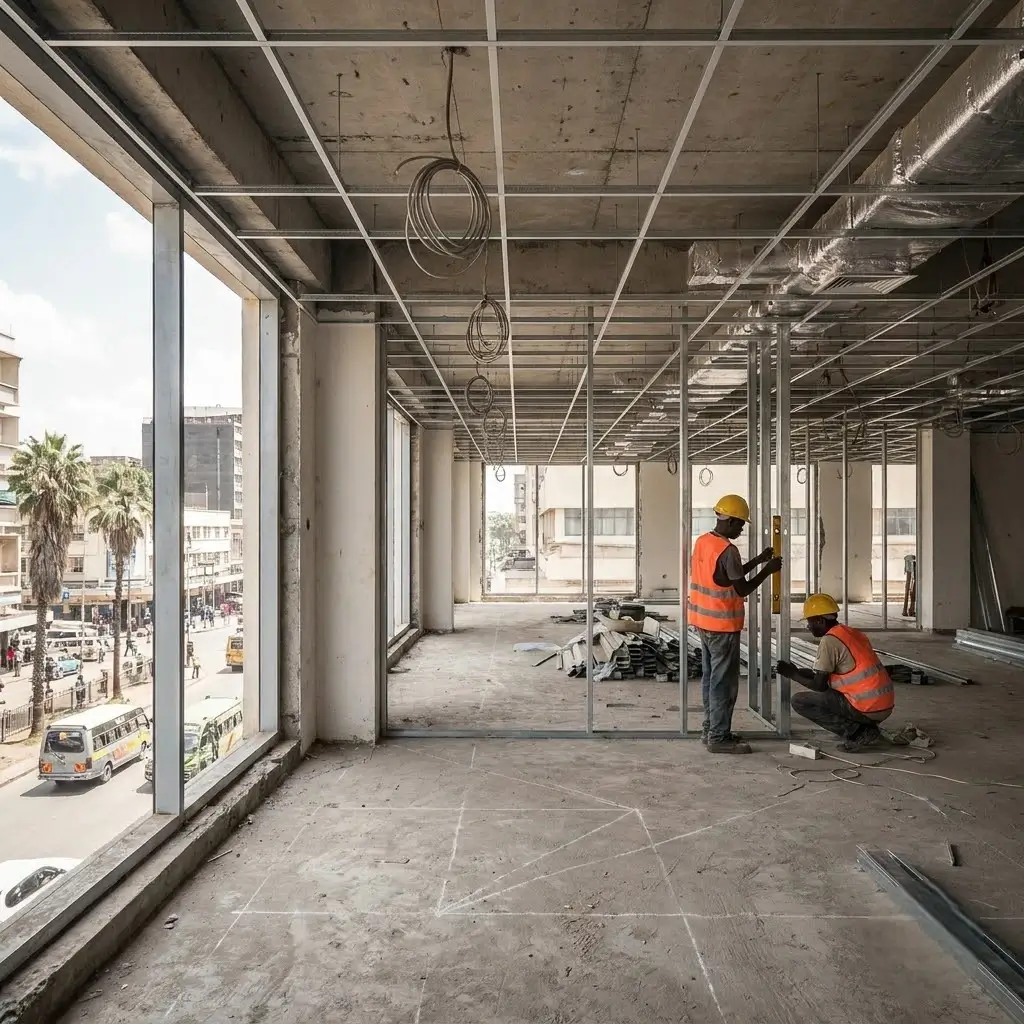
Type "interior designers Nairobi Kenya" into Google and you'll mostly get living rooms. Feature walls, kitchen islands, that one wardrobe everyone photographs for Instagram. It makes sense — residential work is the bulk of the market, and it photographs well.
But if what you're actually staring at is an empty bank branch, a half-built clinic, or a floor of raw office space that needs to be ready before the lease clock runs out, none of that residential portfolio tells you what you need to know. The questions are different. The risks are different. And frankly, the skill set is different too, even if the same company can do both.
Residential Design Skills Don't Automatically Transfer
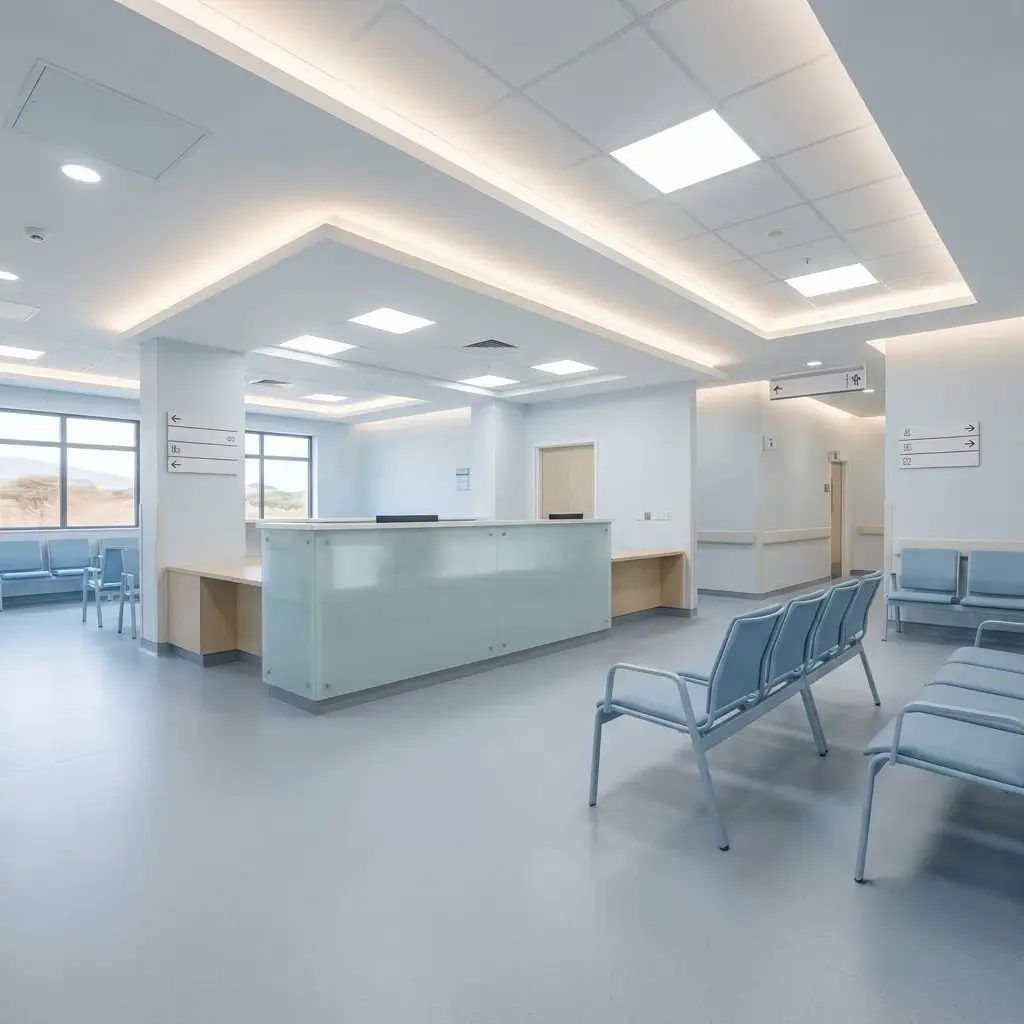
A residential interior designer's job is largely about taste — matching a client's lifestyle to a look. That's real skill, but it's a different job from fitting out a space that has to pass a health inspection, survive twelve hours a day of foot traffic, or keep a bank's brand identical across fifteen branches.
Commercial and institutional fit-outs come with constraints a house never has: building codes for public-facing spaces, fire and safety sign-off, accessibility requirements, and — depending on the sector — regulatory bodies that will actually inspect the finished work. Get any of that wrong and you're not redoing a feature wall, you're delaying an opening date or failing an audit.
What Actually Matters for Commercial and Institutional Fit-Outs
Licensing, Certification and Accountability
Ask for proof of registration as a contractor, not just a design portfolio. For larger corporate or banking clients, quality management certification such as ISO 9001:2015 is worth asking about directly — it's a reasonable proxy for whether a firm runs documented processes or is winging it project to project.
Project Management and Minimising Downtime
A homeowner can usually live with a project running two weeks over. A retail store losing two weeks of trading, or a bank branch that can't open on schedule, is a different conversation entirely. Ask any prospective contractor how they sequence work to keep disruption to the business as low as possible, and ask for a written timeline, not a verbal estimate.
Sector-Specific Experience
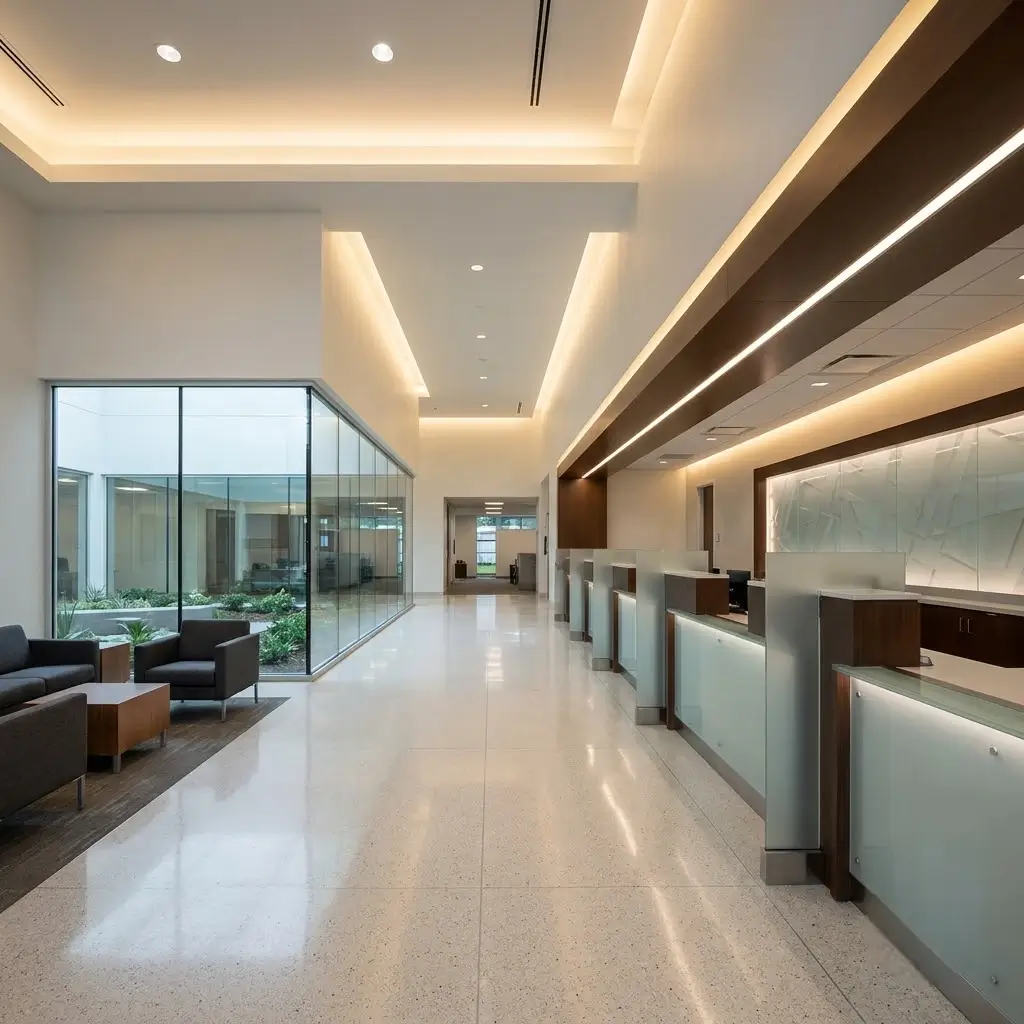
Banking fit-outs involve vault and security specifications that a residential contractor simply won't have handled before. Healthcare spaces need hygiene and infection-control considerations built into material choices. Hospitality spaces take a beating from daily guest traffic and need finishes chosen accordingly. If a firm's case studies are all houses, that's worth noticing — not disqualifying, but worth asking follow-up questions about.
Materials Built for High-Traffic Use
What looks good in a living room can fail fast in a lobby that sees hundreds of people a day. Flooring, wall finishes and door hardware for commercial spaces need to be specified for durability first, appearance second — the reverse of how most residential briefs work.
After-Handover Support
A house fit-out mostly ends at handover, give or take a snagging list. A commercial space needs an ongoing relationship — someone to call when a partition needs adjusting six months later, or when the business expands into the next floor. Ask what support looks like after the ribbon-cutting, not just before it.
Residential vs. Commercial/Institutional: A Quick Comparison
| Consideration | Residential Project | Commercial / Institutional Project |
|---|---|---|
| Primary judging criteria | Aesthetics, personal taste, comfort | Compliance, durability, brand consistency |
| Regulatory involvement | Minimal beyond standard building approvals | Sector-specific: banking security, health codes, fire safety, accessibility |
| Cost of delay | Inconvenient | Directly affects revenue or service delivery |
| Material priority | Look and feel | Durability under daily heavy use |
| Post-handover relationship | Occasional snagging | Ongoing maintenance and future expansion |
| Useful proof points | Styled portfolio photos | Certifications, sector case studies, project timelines delivered |
Where R World Enterprises Ltd Fits In
R World Enterprises Ltd. has been doing general contracting and fit-out work in Nairobi since 2002, and the client list leans heavily commercial and institutional — banks, corporate offices, hotels and NGOs among them. The firm also holds ISO 9001:2015 quality management certification, which speaks to the process point above: documented workflows rather than one-off project management.
The point isn't that a commercial fit-out specialist can't also do a beautiful home. It's that when the brief is a bank branch or a clinic, the questions worth asking are about compliance, timelines and durability — not just mood boards.
Planning a commercial or institutional fit-out in Nairobi? Get in touch with R World Enterprises Ltd. to talk through your project.
Frequently Asked Questions
What's the real difference between a residential and a commercial interior designer in Nairobi?
A residential designer is judged mostly on aesthetics and comfort. A commercial or institutional designer has to work around building codes, sector-specific compliance, business continuity during the works, and a brand that has to look the same across multiple sites.
Do commercial fit-outs in Kenya need a contractor with ISO certification?
It isn't a legal requirement, but for banks, government tenders and larger corporates, ISO 9001:2015 certification is often used as a shortlisting filter because it signals a documented quality management process rather than ad-hoc site management.
How long does an office or bank branch fit-out take in Nairobi?
It depends heavily on scope, but a single-floor office fit-out typically runs from a few weeks to a few months, while a full bank branch with security and vault requirements can take longer. Get a project-specific timeline in writing before signing.
Can one contractor handle both the construction and the interior design?
Yes, and for commercial projects it's often preferable, since a single point of accountability avoids the finger-pointing that happens when a designer and a separate contractor disagree over site conditions.
Which sectors need the most specialised fit-out experience in Kenya?
Banking (security and vault work), healthcare (hygiene and infection-control standards), and hospitality (guest-facing finishes under heavy daily use) tend to demand the most sector-specific know-how.