

You walk into a flat in Kilimani, and something’s off. Nothing you can name straight away – the sofa’s nice, the paint’s fresh, and the art’s hung at the right height. But the room doesn’t work. You sit in it and end up perching on the arm because the seating’s angled at the TV instead of at each other. That’s the gap between decoration and proper design, and it’s the whole reason ‘Interior Designers Nairobi Kenya‘ searches turn up so many firms that photograph brilliantly and function poorly.
What separates the ones worth hiring
The good firms start with questions that have nothing to do with colour swatches. How do you actually move through this flat before work? Do you eat at the table or on the sofa, whatever anyone tells you? R World has been running this kind of brief with clients across Nairobi long enough to know the answer changes the whole layout – not just the finish.
Skip that stage, and you get a kitchen island that blocks the fridge door or a home office wedged into a corner with no plug sockets nearby because it looked tidy on the drawing. Nobody notices on handover day. They notice, three months in, that the WiFi router’s behind the sofa, and nobody remembers why.
Interior décor in Nairobi vs actual design
There’s a real difference worth being blunt about. Decor is what you can point at — the cushions, the art, the finish on the cabinets. Design is what you can’t do: how light crosses the room by 4pm, whether the corridor bottlenecks when two people pass, or whether the “statement wall” is the first thing you see walking in or something you only notice once sat down. Plenty of Interior Design Companies Nairobians are excellent at the first and skip the second entirely, and it shows the moment you actually live there rather than just view it.
Why interior design firms in Nairobi get judged on the invisible bits
A two-bed in Lavington with a decent floor area can feel poky or generous depending almost entirely on traffic paths and where the sightlines land – nothing to do with what was spent on furniture. The same goes for an open-plan office in Upper Hill: it can look sharp in a render and still be unbearable once forty people are on calls and the acoustics haven’t been thought through. That’s the sort of judgement a technical firm brings, and a purely decorative one usually doesn’t.
Residential and commercial aren’t the same conversation.
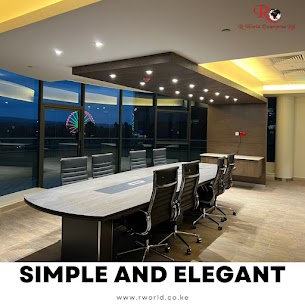
A home has to suit how you actually live in it, not how a portfolio shot suggests you should. An office has to hold up under a different kind of scrutiny — does it help a team work? Does it read right to a client walking through reception? Does the executive suite sit apart in a way that reflects how the business genuinely operates or just how the org chart looks? R World handles both residential fit-outs and commercial projects across Nairobi with that distinction firmly in mind — you can see examples of the range at rworld.co.ke.
Spotting the Best Interior Design Companies in Kenya
Ask about repeat clients before you ask to see the portfolio. A firm that gets referred by the same three families in Karen and Runda over several years is telling you something a glossy photo can’t. The Architectural Association of Kenya, which represents interior designers alongside architects and planners nationally, is a reasonable place to check whether a firm or its lead designer holds proper professional standing — worth five minutes before you sign anything.
If you’re weighing up interior design companies In Nairobi, Kenya, for a renovation or a fit-out, start with the brief, not the mood board. Get in touch with R World and have that conversation first.