


You’ve probably already scrolled through a dozen “top 10 interior designers in Kenya” lists. Most of them read the same way: glowing, vague, written by someone who’s never set foot in the space they’re describing. That’s not much help when you’re the one about to spend real money and live with the outcome for the next ten years.
So let’s skip the superlatives. Here’s what actually separates the best interior designers in Kenya from the ones who are good at marketing themselves.
It Starts With Whether They Ask the Right Questions
Any firm can ask what colours you like. The best interior designers in Kenya ask something closer to how you actually move through a room on a Tuesday morning or whether the dining table doubles as a desk more often than not.
That distinction sounds small, but it isn’t. A designer who skips straight to finishes and furniture is guessing at how you live. One who slows down at the brief is designing for it. R World Enterprises Ltd, working across Nairobi’s residential and commercial projects, treats this stage as the actual work, not a formality before the fun part starts. You can see how that plays out across their portfolio at rworld.co.ke.
Skip this step and the problems don’t show up on day one. They show up six months in, when the living room gets unbearable glare every afternoon or the kitchen island sits exactly where everyone needs to walk.

What Separates Interior Design Firms in Nairobi From Each Other
Nairobi has no shortage of interior design firms. Search results are full of them, and most describe themselves with the same three or four words: creative, professional, reliable. None of that tells you anything.
What actually separates one firm from the next is the technical layer underneath the styling: how light moves through a space across the day, where people naturally walk and whether the layout fights that or works with it, and what happens to sound in an open office once the room’s full of people and phone calls.
A two-bedroom flat in Kileleshwa can feel spacious or cramped depending almost entirely on how that layout gets handled, not on how much got spent on the sofa. Firms that get this right work through it with you directly, adjusting and reconsidering, rather than presenting a finished concept and asking for a signature.
Best House Interior Designs in Kenya Come From Slowing Down
Ask around, and the best house interior designs in Kenya rarely came from a client handing over a Pinterest board and stepping back. They came from a slower process, one where the designer pushed back, asked follow-up questions, and treated the brief as something worth getting right before touching a single finish.
That’s inconvenient if you’re in a hurry. It’s also the difference between a home that looks good in photos and one that actually works for how you live in it. Morning light in the kitchen, whether the bedroom lets you switch off properly, or whether the sitting room is somewhere you want to be rather than somewhere you’ve been placed, none of that gets fixed after the fact.
Office Interior Designers in Nairobi Are Solving a Different Problem
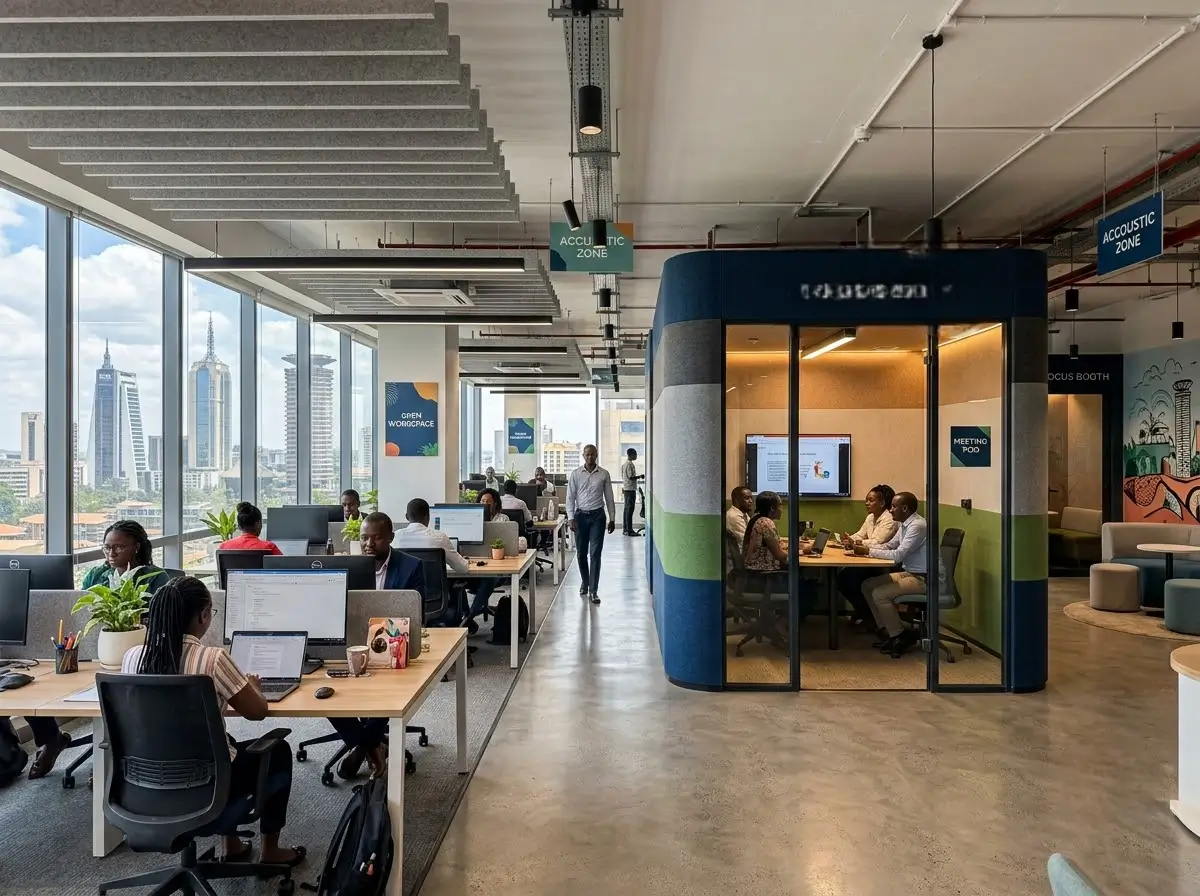
Residential and commercial work aren’t the same; they’re wearing different furniture. Office interior designers in Nairobi are dealing with something closer to an operational question than a decorating one. Layout affects how teams actually work together, how a client reads the business the moment they walk in, and whether the space quietly helps productivity or gets in its way.
An open-plan layout that looks sharp in a render can be exhausting to sit in once the acoustic zoning hasn’t been thought through. A meeting room too close to the open floor bleeds sound both directions. An executive suite tucked behind its own corridor sends a message about hierarchy that might not match how the business wants to be run. The best interior designers in Kenya working on commercial briefs treat these as design problems, not afterthoughts.
How to Tell Interior Designers in Nairobi, Kenya, Apart When Everyone Claims to Be the Best
Nearly every firm’s website calls itself the top choice. That’s not useful information: it’s just what websites say. The clearer signal is repeat business. Clients in Westlands, Karen, and Upper Hill don’t return to a firm or send a colleague through the door because a photo looked good online. They come back because the project was managed properly and the finished space matched what was actually discussed.
When you’re comparing interior designers in Nairobi, Kenya, ask how many of their current projects came from referrals rather than cold enquiries. That number tells you more than any portfolio will.
Where to Start
If you’re weighing up interior designers in Kenya for a home or a commercial fit-out, start with the brief, not the mood board. Who’s using the space, how, and what does it actually need to do for them day to day?
R World Enterprises Ltd has been running that conversation with clients across Nairobi for long enough to know it’s the part that determines whether the rest goes smoothly. Get in touch through rworld.co.ke and start there.
Comparing interior designers in Kenya for your project?
Start with the brief, not the mood board. Talk to our team about what your space actually needs to do.
Contact Us